Are Tinted Windows Legal in NYC?

Are tinted windows legal in NYC? In New York, legality depends on the exact light transmission rate, not the visual effect. To avoid tickets, stops, or failed annual inspections, it is essential for every car owner to know exactly how dark the tint can be and which windows are restricted before making a decision. The following will explain the latest window tinting regulations in New York in the clearest and most practical way.
New York Window Tinting Laws
The window tinting regulations in New York are among the strictest in the United States. Therefore, a clear understanding of each rule is crucial for determining the legality of window tinting.
① What is VLT? Why is its legality determined?

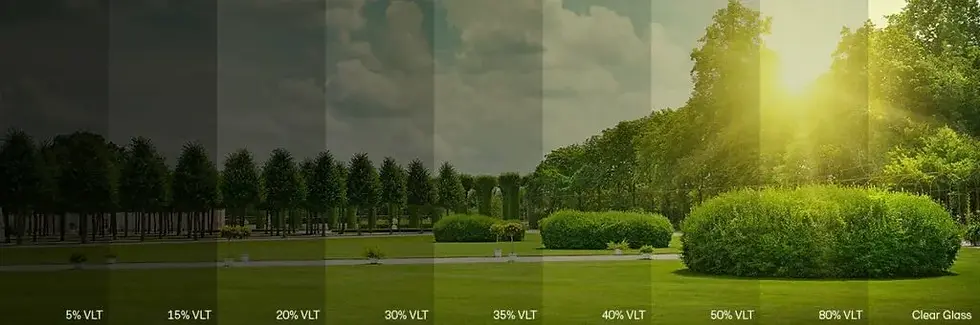
VLT (Visible Light Transmission) represents the light transmittance. The higher the value, the more transparent the glass is; the lower the value, the darker it appears. The legal standard in New York is determined solely by the VLT value, not by how dark it looks. Therefore, legality must be determined by measurement rather than by the naked eye.
② The front side windows must have a visible light transmittance (VLT) of ≥70%
New York has the strictest requirements for front windows. The light transmittance of the front side windows must be 70% or higher. 70% is the darkest legal option that can be applied to the front window. 35% or 20% is acceptable in most states, but it is illegal in New York and will result in a failed annual inspection.
③ There is no depth limit for the rear side windows (up to 5% can be covered)
The rear side windows are the most lenient area in New York regulations. Whether it is 35%, 20%, or 5% (limousine depth), all are legal. However, the vehicle must be equipped with left and right side exterior mirrors.
④ Rear window tinting unrestricted (dark tints up to 5% permitted) but requires side mirrors fitted on both sides
There is no minimum VLT limit for the rear windshield either. You can choose the same depth as the rear seats, such as 20% or 5%. However, the vehicle must still have left and right side rearview mirrors to ensure safe driving vision.
⑤ Only the AS-1 top strip can be applied to the front windshield (full coverage is not allowed)
The front windshield is prohibited from being covered with full dark film. The only legal area is the narrow strip above the AS-1 marking, which is usually used to block sunlight. Any area beyond this will be regarded as illegal.
⑥ Annual inspections will use a photometer to test the light transmittance of the front window
The annual inspection in New York is not just a cursory glance. Instead, a photometer is used to precisely measure the VLT of the front window. If it is below 70%, even if it appears very light to the naked eye, it will be directly judged as unqualified. The car owner must remove the window film on the front window and reapply for the annual inspection.
Are Tinted Windows Legal in NYC?
To determine whether window tinting is legal in New York, it's not just about how dark it is, but which window it's applied to. The regulations for different windows are completely different.
Front side windows: They must be 70% to be legal (the strictest position)

In New York, it is stipulated that the light transmittance of the front car windows must be ≥70%. That is to say:
50% → illegal
35% → illegal
20% → illegal
5% → illegal
Visual effect: 70% appears almost transparent, only slightly softening the light. If ceramic film is chosen, it can maintain a transparent appearance while providing heat insulation.
Rear side windows: Any tint depth (20%, 5% are both legal) is allowed
There is no minimum VLT limit for the rear seats in New York. You are free to choose:
35% (Natural Harmony)
20% (Strong Privacy)
5% (Limousine Depth)
Visual effect: Rear privacy glass of 20% or 5% can usually significantly enhance privacy while adding a more layered look to the vehicle's overall appearance.
Rear Windshield: Up to 5% tinting is allowed, but both left and right rearview mirrors must be present
There is no depth limit for the rear bumper either. The key point is not the depth but whether the vehicle is equipped with dual side exterior mirrors.
Visual effect: The rear guard is often made to be the same depth as the rear row, such as 20% or 5%, which makes the visual appearance more uniform and also enhances the anti-glare effect.
Front Windshield: Full film application is not allowed; only the AS-1 top strip can be applied
In New York, it is prohibited to apply full dark tinting film to the front windshield. The only legal area is the narrow strip above the AS-1 marking at the top, which is used to reduce glare.
Visual effect: A light-colored sun protection band is presented at the top, while the rest of the front shield remains completely transparent.
Table: Legal vs Illegal Tint Levels
VLT Level | Front Windows (Driver / Passenger) | Rear Side Windows (Rear Passenger) | Rear Windshield | Notes |
70% | ✔ Legal | ✔ Legal | ✔ Legal | The only depth that passes NY front-window inspection. |
35% | ✘ Illegal | ✔ Legal | ✔ Legal | A common rear-window choice, but never allowed on front windows. |
20% | ✘ Illegal | ✔ Legal | ✔ Legal | Higher privacy; widely seen on NYC roads. |
5% (limousine) | ✘ Illegal | ✔ Legal | ✔ Legal | Extremely dark; only suitable for rear windows and rear windshield. |
Enforcement Differences Across NYC
Although the regulations in New York are uniform, the enforcement intensity varies across different areas. Understanding these differences can help car owners more clearly determine "where the risks are higher" and "which areas require strict compliance".
Manhattan: The front window with a dark color is most likely to be inspected
The police force in Manhattan is the most concentrated and the traffic flow is also the greatest. The police are particularly sensitive to the light transmittance of the front windows. As long as the driver's face is not clear enough, they are likely to be stopped. Even if the glass is 70% tinted but the glass itself is dark, they may still be required to check the VLT. Therefore, drivers commuting in Manhattan almost have to ensure that the front windows are fully compliant.
Queens / Flushing: Annual inspections are strict, but there are relatively few daily road checks.
Flushing is one of the areas with a high density of annual inspection stations in New York. During the annual inspection, the front window VLT is very strictly inspected, and photometer detection is indispensable. However, road inspections for daily use are relatively rare, especially in residential areas or commercial zones. Many car owners only discover that the tinting is too dark during the annual inspection.
Brooklyn: Enforcement is moderate, with certain areas being relatively sensitive
The enforcement intensity in Brooklyn is in between that of Manhattan and Queens. Checkpoints are more frequent on popular routes such as Downtown and near Williamsburg, but the overall pressure is less than that in Manhattan. If the front window is noticeably dark, there is still a relatively high probability of being questioned or required to undergo a test.
Long Island: Relatively relaxed, but the annual inspection must still meet 70% compliance
The driving environment on Long Island is relatively relaxed. The probability of being stopped on the road due to window tinting is much lower than in the inner city of NYC. However, as long as you have your vehicle inspected in New York State, 70% of the window regulations still apply completely. Many Long Island car owners' windows also fail to pass the inspection in New York State.
Summary: Different levels of law enforcement, but identical regulations
Manhattan is afraid of "stop-and-search" → Therefore, it is even more important to ensure compliance with the front window regulations.
Farahan fears "failure of annual inspection" → Before starting the construction, it is essential to test the VLT.
Brooklyn lies between the two.
Long Island has a relaxed daily routine, but the annual inspection remains strict.
What Tint Setup Is Both Legal and Practical in NYC?

When choosing window films in New York, the most common problem that car owners encounter is: How can one achieve both good appearance and legal compliance?
a. Front Window: 70% Transparent Ceramic Film
The front windows in New York must have a light transmittance of ≥70%, so dark-colored front windows are completely impractical in NYC. However, many car owners are concerned: "Will transparency not provide insulation?" In fact, the insulation effect is mainly determined by the film material technology, not the color shade. Transparent ceramic films can provide stable infrared radiation blocking and significant cooling effects within legal limits. They do not affect the night vision nor the annual inspection. This is also the front window configuration that most professional stores actively recommend.
b. Rear side windows: 20% or 35%
There is no depth limit for the rear panel. You can choose a deeper film based on the appearance and privacy requirements.
35%: The overall appearance is more natural, and there is no abrupt difference compared to the front window.
20%: Privacy is significantly enhanced, and the uniformity of the appearance is stronger. On the roads of New York, 20% is the most common combination, and it works well on SUVs, sedans and Teslas.
c. Rear Windshield: Uniform depth as for the rear seats
The rear windshield is usually at the same depth as the rear seats, such as 20% or 35%. Keeping the depth consistent makes the appearance more harmonious, prevents the rearview mirror from being too dark (which is safer than 5%), and ensures a more stable heat insulation effect. For the large curved rear windshields of Tesla Model 3/Y, this combination is particularly practical.
d. The heat insulation effect is not related to the depth but is determined by the membrane material
Many car owners think that "dark colors offer better insulation", but this is a misunderstanding. What really affects insulation is the material of the film:
IR (Infrared) transmission rate
TSER (Total Heat Insulation Rate)
Base material (ceramics, nano-ceramics, etc.)
Therefore, even if the front window maintains 70% of the legally permitted transparency, as long as the membrane material is of high quality, a significant cooling effect can still be achieved.
Why Professional Shops Matter for Legal Tint?

In New York, whether the film application is compliant is not as simple as "whether it is deep or not". It depends on the combined results of measurement, film material, construction method and the vehicle's own conditions. Ordinary film application stores often only focus on the appearance but overlook the annual inspection standards and regulatory details; while professional stores have a completely different process.
The professional store will measure the original factory VLT before the construction to prevent the annual inspection from failing
The legal standard for the windows in New York is that the "front window" must have a true light transmittance of ≥ 70%. However, the light transmittance of the original factory glass varies greatly among different vehicle models, and some even have an original factory value of less than 70%. Professional stores will use a light meter to measure the original VLT before construction to ensure that the combined use of the film materials still complies with the regulations. This process can prevent situations where the window has a light transmittance of 70% but still fails the annual inspection.
Understanding the original factory glass' optical properties enables the calculation of the actual VLT after applying the film.
The transmittance after applying the film is not "the VLT of the film", but: the VLT of the original glass × the VLT of the film material. Professional technicians are capable of assessing the optical structure of different glasses, including: UV and IR coatings, greenish or bluish-colored glass, and the optical superposition of privacy glass. Only by doing so can they accurately determine the legality after applying the film.
Familiarize Yourself with the Annual Inspection Standards and Common Violations in New York
Professional film application stores will adjust the film application recommendations according to the annual inspection process in New York State. They know:
The annual inspection spectrometer has high accuracy.
Defects on the film coating at the tail edge may affect the measurement.
Models with dark front windows (such as Tesla) are particularly prone to exceeding the limit.
These experiences can prevent car owners from violating regulations due to insufficient understanding of the laws.
Be familiar with the VLT features of sensitive models such as Tesla, BMW, and Mercedes.
The original factory glass of these models is usually darker than that of ordinary vehicles. For instance:
The original VLT coating on Tesla's front windows is usually thinner than that of ordinary vehicles.
The glass with UV protection layer on BMW/Mercedes will have a reduced light transmittance when layered together.
Professional stores must be aware of these characteristics in order to provide legal solutions.
Use high-grade transparent ceramic film to ensure that the front window is both legal and heat-insulating.
The front window cannot use dark films, but it still needs to be insulated. Professional stores will choose transparent ceramic films with high infrared blocking, high light transmittance, and no impact on night vision, making the front window both legal and practical.
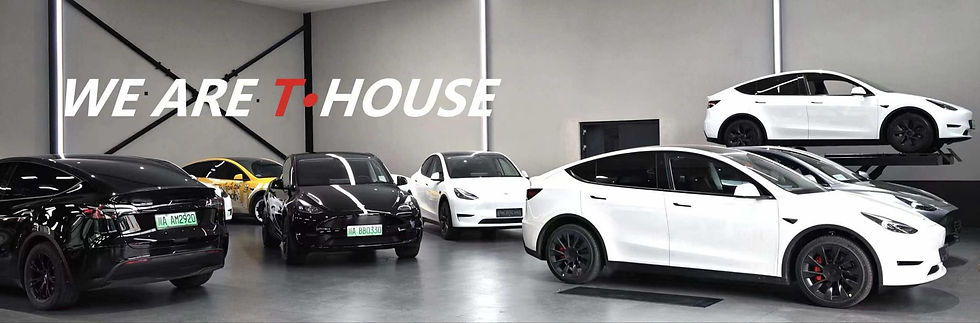
Why T-House Is a Trusted Option for NYC Drivers

Before the construction, the original VLT of the vehicle will be measured to ensure that the actual light transmittance after the film application still meets the legal standard of 70% for the front windows in New York.
The technicians have received professional training from brands such as 3M, XPEL, and Llumar, enabling them to accurately assess the effect of film layering and the optical performance of different vehicle models.
Using a dust-free and temperature-controlled construction space ensures a more stable application of the film, avoiding the influence of environmental factors on the measurement results or annual inspection performance.
We have extensive experience with original factory glass that is darker, such as Tesla, BMW, and Mercedes, and can predict risks and provide compliant suggestions in advance.
The front windows use high-light-transmittance ceramic or nano-ceramic films, which not only comply with the law but also provide heat insulation effects without sacrificing comfort.
The quotations are transparent, and we do not recommend illegal depth. We will not encourage users to install "attractive but non-compliant" front window configurations.
The store is located in Flushing, close to several major roads, making it convenient for car owners in all districts of New York to come for inspection or construction.
FAQ: NYC Tint Legality Questions
Q1. Are tinted windows legal in NYC?
Legal, but the front window must reach 70% VLT. There is no depth limit for the rear seats and the rear window.
Any dark film on the front window that is less than 70% in coverage is illegal. It is also illegal to apply a full sheet of dark film to the front windshield.
Q3. Is 35% tint legal?
The front window is not compliant. The rear side windows and the rear windshield are fully compliant.
Q4. Why do cars fail NY inspection?
The most common reason is that the light transmittance of the front window is insufficient. Factory-grown glass is too dark, the VLT (visible light transmittance) is not tested before applying the film, and when the film is 70% thick, the combined transmittance becomes even lower, all of which can lead to failure.
Q5. Do cops pull you over for tint in NYC?
Yes. Especially in Manhattan, if the driver's face is not clearly visible, the police often will proactively check the depth of the front window.
If you want to ensure that the film installation in New York is fully compliant, you can first obtain a professional and transparent film pricing quote to understand the differences in different film materials and legal depth options. You can also schedule a visit to the store for a VLT inspection to confirm that the transparency of the front window before and after the film application meets the 70% regulatory requirement. If you are unsure about the vehicle's characteristics or the film combination, you can also communicate with the certified technician, who will provide objective suggestions based on your driving area, original vehicle glass, and insulation needs by professional personnel. This will help you make the most suitable film installation decision without being misled.
📍Address :
15-45 128th Street,
Flushing, New York
United States
📩 E-mail :thouseny1@gmail.com
📞 Telephone : (845) 501-3559
🌐 Website: https://www.thouseny.com/
Comments